
Gen Z takes to the streets across Europe: Why are young people angry?
27 October 2026 /
Elise Depoortere 6 min
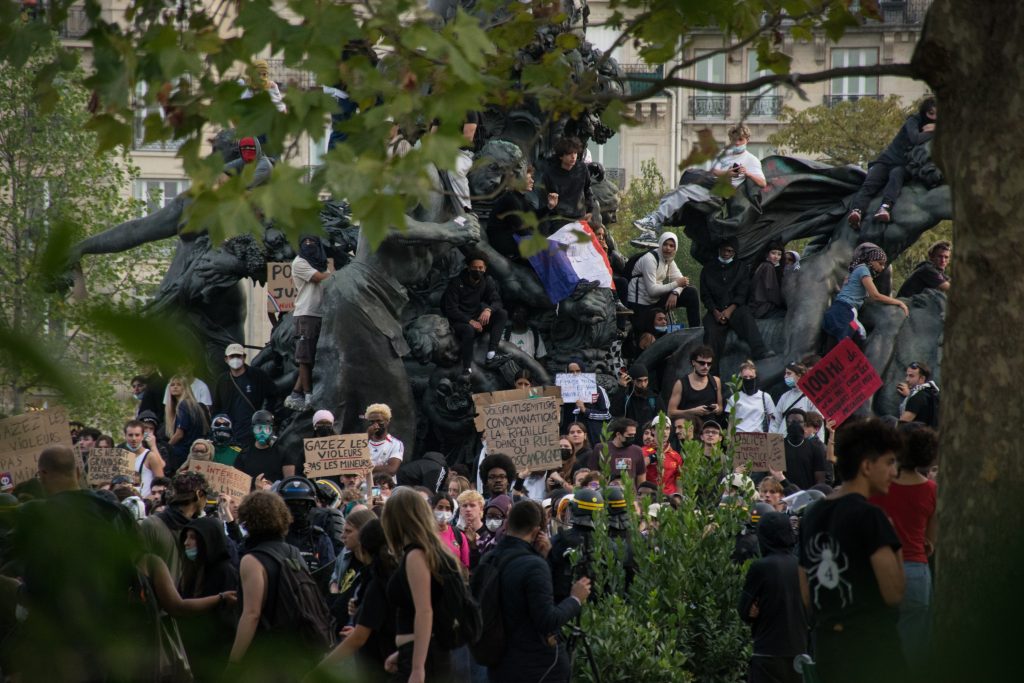
Photo: Jules, High school and university students’ demonstration in Paris on 6 October 2026, Place de la Nation, via Wikimedia Commons.
From deteriorating schools in France to housing protests in Spain and Portugal, young Europeans are taking to the streets over rising living costs, limited opportunities and a growing sense that governments are failing to address their concerns. These protests do not form a single Europe-wide movement, nor do they share exactly the same causes. Yet they raise a common question: can young Europeans still see a realistic path from education to decent work, and from financial dependence to an independent life?
Across Europe, young people are protesting issues ranging from underfunded education to soaring housing costs, putting pressure on governments already facing economic and political challenges. From blocked school entrances in France to makeshift camps in Spain and Portugal, demonstrations are exposing a growing frustration with the cost of building an independent life.
Similar scenes have emerged in Belgium, Italy and Albania, pointing to an autumn of unrest across the continent. While much of the recent coverage has focused on violence and clashes with police, the protests themselves reveal a broader set of concerns: affordable housing, access to education, social equality and the quality of public services.
In France, students have mobilised against teacher shortages, overcrowded classrooms and deteriorating school buildings. In Spain, the eviction of 87-year-old Maricarmen Abascal, who died on 7 October, became a rallying point for housing activists. In Portugal, protesters have occupied public spaces to denounce rising rents, while in Albania, students have joined wider anti-government demonstrations fuelled by corruption allegations and a lack of economic prospects.
The cost of living: when essentials become unaffordable
For many young Europeans, the gap between income and everyday expenses is becoming increasingly difficult to manage. Housing, food and energy costs put pressure on household budgets, leaving less money for education, leisure, savings and other expenses. According to Eurostat data, EU prices for food and non-alcoholic beverages rose by 34% between August 2021 and August 2026. Among the EU’s largest economies, the increase reached 25% in France, 30% in Italy, 34% in Germany and 35% in Spain.
Food prices were already increasing before Russia’s full-scale invasion of Ukraine in February 2022. The war added to existing pressures through higher energy, fertiliser and transport costs, alongside disruptions to agricultural markets.
For younger people, these increases come on top of other financial challenges. Those entering the labour market often have limited savings, while students and young workers may depend on family support to cover basic expenses.
Housing: a growing barrier to independence
Housing has become another major source of anger, particularly in cities where rents have outpaced what many young people can afford. For those at the beginning of their careers, finding a place to live independently can mean spending a substantial share of their income on rent or remaining financially dependent on their families. The problem is not limited to major capitals, shortages of affordable housing and pressure on rental markets affect communities across Europe.
According to Eurostat, Europeans left the parental home at 26.3 on average in 2025. The figure rises to 30.2 in Spain and Italy. Leaving home does not necessarily bring relief: 11.1% of 20–24-year-olds in the EU live in households spending at least 40% of their disposable income on housing, the highest share among young age groups.
In Portugal, housing prices had risen by more than 130% since 2013, especially in Lisbon, Porto, the Algarve, and coastal tourist areas. This made Portugal one of Europe’s least affordable housing markets. The movement known as Casa para Viver announced demonstrations in the capital against housing speculation and in defence of the right to housing.
Education and employment: an unequal starting point
For many young Europeans, concerns begin much earlier, with the quality of education and the opportunities available after graduation.
In France, student protests since September have focused on teacher shortages, overcrowded classrooms and deteriorating school buildings. Beyond the immediate conditions in schools, these demands raise a broader question about equal opportunities: can public education provide every student with the tools they need to succeed, regardless of their background or where they live?
The wider socioeconomic context helps explain why these issues matter. In 2025, 25.5% of people aged 15–29 in France were at risk of poverty or social exclusion, compared with 24.2% across the EU, according to Eurostat.
In Belgium, demonstrations have also highlighted growing tensions over education, working conditions and public spending. Teachers and students have opposed reforms introduced by Education Minister-President Élisabeth Degryse, including measures that critics argue would increase teachers’ workloads without corresponding salary increases. Students have also raised concerns about higher university tuition fees, warning that rising costs could make higher education less accessible and deepen existing inequalities. More broadly, opposition to austerity measures has brought concerns about purchasing power and the future of public services to the forefront. Some demonstrations have also been marked by allegations of police violence, further fuelling tensions between protesters and the authorities.
In Albania, students have been demonstrating in Tirana since 13 October, demanding better study conditions, greater public support and the resignation of Prime Minister Edi Rama. Their mobilisation has joined a broader anti-government movement driven in part by corruption allegations and limited economic prospects.
A generation struggling to imagine its future
The anger on Europe’s streets cannot be reduced to a single cause or attributed to an entire generation. Not every protester is a member of Gen Z, and not every young European shares the same priorities. Some demonstrations focus on housing, others on education, corruption or social protection. Yet these grievances intersect around a common concern, the difficulty of securing the basic conditions for an independent and stable life.
For young people entering adulthood, the prospect of finding affordable accommodation, obtaining stable employment and accessing reliable public services can feel increasingly uncertain. Rising prices put pressure on their immediate budgets, while problems in education and the labour market shape their longer-term prospects.
The question is not simply whether governments can restore public order or contain individual demonstrations. It is whether they can offer credible answers to the concerns behind them. Across Europe, young people are making those concerns visible. Whether their mobilisation leads to lasting political change remains uncertain. What is clear, however, is that the relationship between economic security, public services and trust in political institutions has become an increasingly urgent challenge for European governments.