Britain outside the Union, inside Europe’s orbit
16 April 2026 /
Tatiana Pires 5 min
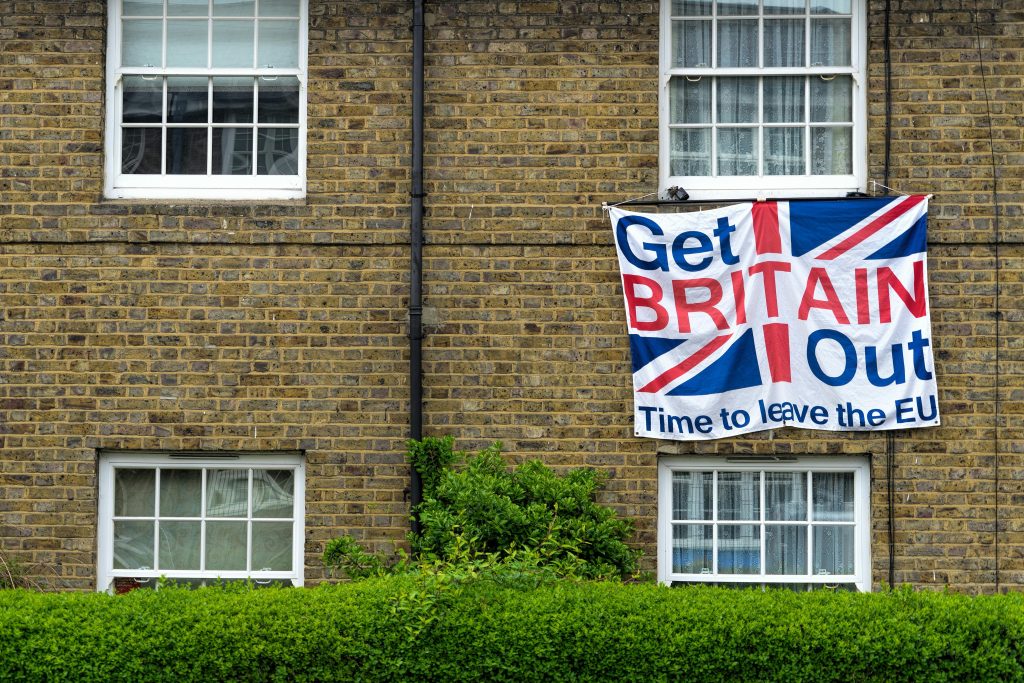
Photo : J.Plenio – Pexels
5 years after Brexit, the United Kingdom is once again looking towards Europe. From renewed cooperation on defence to a recent British push to be included in “Made in Europe” initiatives, London’s evolving strategy makes us question if the UK has really distanced itself from Europe.
Out of the Union, still in the neighbourhood
Brexit was, above all, a legal and political rupture. By leaving the European Union (EU), the United Kingdom (UK) exited the single market, the customs union, and the EU’s decision-making structures. But leaving an institution is not the same as leaving a system.
Geography, economic interdependence and shared security concerns continue to bind the UK to the continent. Despite Brexit, the EU remains the UK’s largest trading partner. The European Commission notes that the EU remained the UK’s biggest trading partner in 2024, accounting for 41% of British exports and 51% of imports, highlighting the enduring weight of European markets. Brexit changed Britain’s position from decision-maker to external partner, not its environment per se.
Security: where separation never really happened
If Brexit was meant to restore sovereignty, it did not fundamentally alter the UK’s role in European security. The United Kingdom remains a central actor within NATO, one of the alliance’s largest military spenders, accounting for over 2% of GDP on defence, according to NATO estimates. Since Russia’s invasion of Ukraine in 2022, the UK has been among the leading European contributors of military aid and training.
Cooperation with European allies has also intensified outside EU structures, with joint initiatives such as the UK-led Joint Expeditionary Force involving several Northern European countries and close intelligence sharing networks, underlining how deeply embedded Britain remains in Europe’s security architecture.
In this domain, the UK is not an outsider but a pillar of the system.
An economy that cannot decouple
Economic separation has proven equally complex. Despite new trade frictions, economic ties remain dense. Supply chains in sectors such as automotive, pharmaceuticals and energy continue to operate across borders, making full decoupling both costly and impractical.
Regulation is another key channel of influence. As described by the European Commission, the EU’s regulatory power, often referred to as the “Brussels effect”, extends beyond its borders, shaping global standards in areas such as environmental rules, data protection and product safety. For UK companies exporting to the EU, compliance with these standards remains essential. In practice, this limits the scope for divergence: even outside the EU, British firms often follow European rules to maintain market access.
“Made in Europe”
This structural interdependence has become increasingly visible in recent months. According to Euronews, the UK has launched a diplomatic effort to align more closely with European industrial initiatives, including discussions around “Made in Europe” strategies aimed at strengthening domestic production and reducing external dependencies. This reflects a broader shift in European industrial policy, particularly in response to global competition and supply chain vulnerabilities. For the UK, remaining outside these initiatives risks economic marginalisation in key sectors such as green technology and manufacturing.
The situation reveals a striking paradox: a country that left the EU to regain autonomy is now seeking closer alignment with its industrial ecosystem.
The limits of “going it alone”
Brexit was often framed as an opportunity for regulatory freedom: the ability to diverge from EU rules and pursue an independent economic model. However, in reality, this freedom has clear limits.
Divergence can create barriers for trade, increase costs for businesses and reduce investment certainty. According to analyses by institutions such as the Organisation for Economic Co-operation and Development, regulatory alignment remains a key factor in maintaining economic stability and attracting investment.
As a result, many British businesses favour predictability over divergence. The theoretical freedom to “go it alone” exists, but in practice, economic interdependence constrains how far the UK can move away from European standards.
A seat lost, not the table
Brexit undoubtedly changed the UK’s role in Europe since the country no longer participates in EU decision-making, nor does it shape policies from within. But it has not left the European system.
Security ties remain strong, economic interdependence persists and political coordination, although more informal, continues where interests align. The United Kingdom today occupies a different position: outside the Union, but still inside the system. And as recent efforts to reconnect with European initiatives suggest, the distance created by Brexit may be narrower than it once appeared.