Between Washington and Moscow: EU’s marginalization in the Ukraine peace talks
11 February 2026 /
Antonio Cardone 5 min
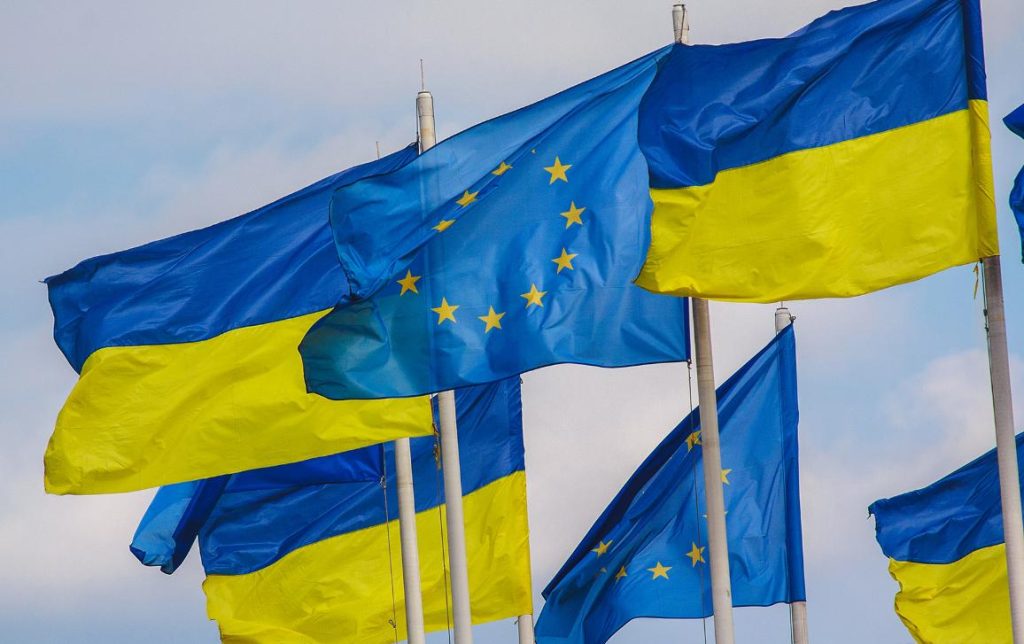
Source: European Union – European Parliament (via Multimedia Centre)
As the peace talks for Ukraine restart and seem to gain new momentum over the last months of 2025, the EU tries to assert its presence as a central and fundamental actor for the peace process. Brussels insists that its absence would hinder every possibility of a just and lasting peace, undermining not only Ukraine’s future, but also the EU’s security. The EU is willing to pass from a role of financial supporter (and possible post-conflict stabilizer) to an actual co-architect of peace. Nevertheless, the Union continues to be excluded from formal peace talks, while the US President Donald Trump continues to seek direct negotiations with Putin’s Russia, hardly considering Ukraine’s will.
The Union’s commitment
The EU has been committed to the conflict since the very beginning; through financial and humanitarian aid, equipment shipping to Ukraine, sanctions as well as through the isolation of Russia. Despite its political exposure and geographical proximity to the conflict, Brussels still struggles to sit at the negotiating table. On the one hand, the internal division between the Union’s Member States plays a significant role in the incapacity of the EU to speak with a single, authoritative voice and to pursue a common interest. On the other hand, it is in the converging interest of both Russia and the US to exclude the EU from this process, favoring instead bilateral negotiations.
Brussels risks bearing part of the costs of the war while being excluded from the outcome of the negotiations. Since the early days of Russia’s invasion, the Commission and the other European institutions, as well as major Europeanist parties, have framed the war in Ukraine as an existential challenge, stressing repeatedly that Ukraine’s security is inevitably tied to Europe’s own stability, interpreting it as a conflict that defines the Union’s own destiny. Thus, the EU has become Ukraine’s largest financial supporter, a major provider of military assistance, and the primary sponsor of Kiev’s post-war reconstruction, also pressing for the integration of Ukraine in the Union.
In March 2025, the European Council reaffirmed that “there can be no negotiations on Ukraine without Ukraine” and that European security arrangements cannot be decided without the participation of the EU itself. The same message was repeated later that month, when EU leaders explicitly linked diplomatic engagement to continued military and financial support under the banner of “peace through strength”. At an institutional level, the EU has been consistent in warning that a simple ceasefire, if not embedded in a broader political framework, risks freezing the conflict rather than resolving it.
Europe’s structural weakness
Despite this outward unity, the EU’s bid to act as a coherent and cohesive political force is undermined by deep internal divisions. While all Member States formally support Ukraine’s sovereignty and territorial integrity, strong differences among them remain, mainly on the quality and quantity of support, peace talks proceedings and the post-war organization. Another important division concerns the trade-offs that can be considered acceptable with Russia.
Eastern and Nordic Member States, which tend to perceive Russia as a direct and long-term threat, strongly oppose any negotiations involving territorial concessions. From their perspective, any compromise with Moscow risks setting a precedent where aggression can be rewarded, thus destabilizing European security as a whole. Other countries, particularly in Southern Europe and parts of Central Europe, tend to prioritize de-escalation and conflict management. Their significant openness to ceasefire arrangements derives from the potential economic and political costs of an endless war as well as risks of further escalation.
Even though the EU acts as a single actor through its institutions in the international field, the sharp internal political differences undermine its reliability and its effectiveness. The lack of a unified strategic vision weakens the EU’s credibility as a negotiating actor and makes it easier for external powers to bypass Brussels’ will. The European Parliament has warned explicitly about this risk. In a March 2025 resolution calling for faster and more substantial military assistance to Ukraine, Members of the European Parliament stressed that Europe’s influence over peace efforts depends on its ability to act cohesively and decisively.
Crushed between giants
Even though both Washington and Brussels are allies and supportive of Ukraine’s war effort against Russia, their interests and their desired outcomes diverge significantly. The current US-led diplomatic initiatives do not take into account the EU and marginalize its role both in the war and in the possible post-war context. According to the Financial Times, different EU Member States fear the US stance on the conflict, expecting to be ousted definitively from the peace process. The reason behind the American action would be to limit the number of stakeholders involved in the negotiation and to get better leverage in the talks with Putin.
From the US perspective, excluding the EU offers tangible advantages. Bilateral engagement with Moscow allows Washington to negotiate more rapidly, retain strategic flexibility and avoid being constrained by the EU’s institutional complexity. Involving Brussels would require accommodating legal considerations, collective decision-making among 27 Member States, and long-term commitments to reconstruction, accountability and security guarantees, which are all elements that restrict room for maneuver and dilute US leverage. More fundamentally, keeping the EU out of the process helps preserve American primacy in shaping Europe’s security order. Peace negotiated directly by Washington reinforces the US role as the central guarantor of stability on the continent, while limiting the emergence of the EU as an autonomous strategic actor.
In November 2025 this dynamic was clearly exposed when Reuters published the full text of a European counterproposal to a US peace framework. While the US approach prioritized rapid conflict management and de-escalation, the EU proposal focused on sovereignty, defense capabilities and long-term security guarantees, which are elements that would anchor Europe firmly in the post-war order. In this sense, the marginalization of Europe is not a side effect, but a structural feature of US diplomacy.
Russia has shown little interest in engaging the EU as a central negotiating partner. From Moscow’s perspective, Brussels is not a neutral actor, but a normative power committed to sanctions enforcement, accountability mechanisms, and Ukraine’s long-term European integration. Engaging the EU directly would require Russia to negotiate under multiple constraints, including adherence to international law and potential oversight of reconstruction efforts, areas where Brussels wields significant leverage.
Russian officials have consistently framed the conflict as primarily a confrontation with the United States, implicitly downplaying Europe’s independent agency. By limiting EU participation in peace talks, Moscow avoids discussions on war accountability and long-term guarantees for Ukraine, which are core elements of Brussels’ policy agenda. Both Washington and Moscow are interested in reducing the EU’s influence in the negotiation. The result is a diplomatic environment in which Europe is barely consulted and rarely decisive.
The risks of the exclusion
Ukraine itself has consistently argued for Europe’s inclusion in peace efforts, recognizing the EU as a fundamental actor for its future security and economic integration. Ukrainian President Volodymyr Zelensky has repeatedly highlighted the EU’s role in sustaining Ukraine’s war effort and post-war recovery.
However, Kiev’s reliance on US military support inevitably constrains its diplomatic autonomy. When negotiations accelerate, Ukraine risks being pressured to accept frameworks shaped largely by Washington and Moscow, even when these frameworks do not fully align with Ukrainian or European preferences. According to The Guardian, EU leaders fear a settlement that freezes the conflict, leaves Ukraine exposed to renewed aggression, and forces Europe to manage chronic instability along its eastern flank.A more recent Guardian analysis warned that Europe’s marginalization in peace talks has become a growing political fault line, with long-term consequences for the continent’s security credibility. The struggle over Ukraine’s peace process has become a critical juncture for the EU’s geopolitical relevance. Europe possesses resources, proximity and long-term stakes, but remains constrained by internal divisions and by the dominance of both Washington and Moscow. Unless the EU overcomes its internal fractures and translates its economic power into diplomatic leverage, it risks being confined to a reactive role: financing reconstruction, managing instability, and absorbing the outcomes of decisions taken by other powers.