
The European Drone Defence Initiative: building a 360° shield against hybrid threats
16 February 2026 /
Camille Houyoux 4 min
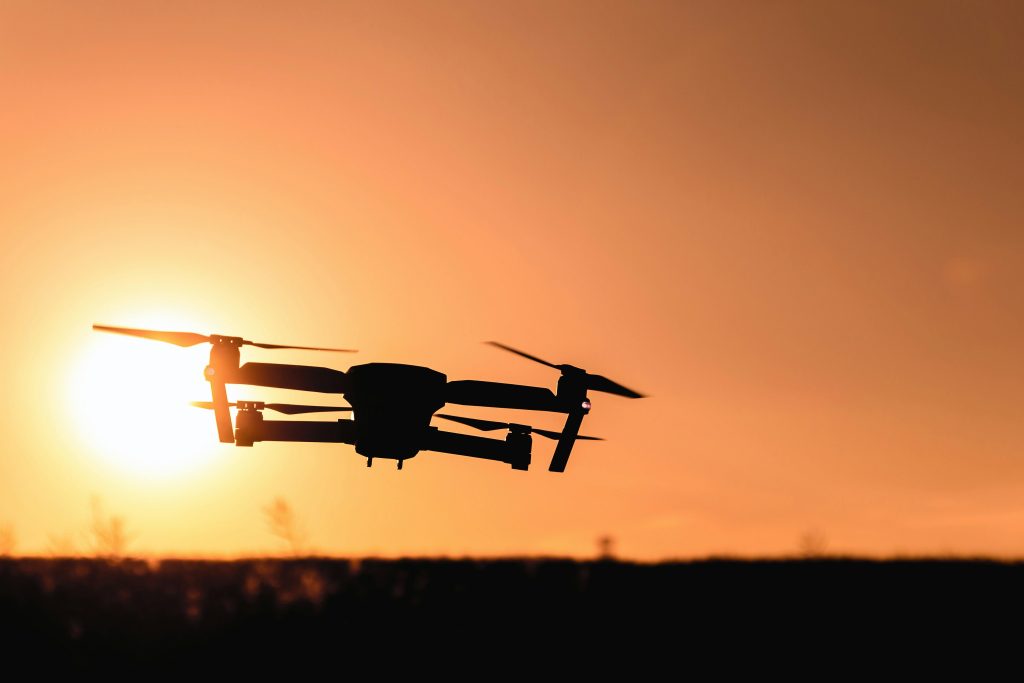
© Photo: Pexels
In October 2025, the European Commission and the High Representative proposed the “Preserving Peace – Defence Readiness Roadmap 2030” in Brussels. The aim is to ensure all EU Member States can deter aggression by the end of the decade. This strategic plan identifies drones as a critical capability gap that must be filled to protect every citizen and square centimeter of European territory. By setting clear milestones for 2030, the EU aims to respond to escalating threats with unity and determination.
The urgency of an aerial response
The rapidly evolving threat landscape, highlighted by the war in Ukraine and the increasing intensity of hybrid warfare acts, demands that Europe establish a sufficiently strong defense posture by 2030. The objective is to credibly deter any aggression. Among the critical systems of modern warfare, drones and autonomous vehicles play a defining role. This compels the EU to acquire independent, interoperable strategic capacities.
In response, the European Commission and the High Representative presented the “Preserving Peace – Defence Readiness Roadmap 2030” in October 2025. This strategic plan, requested by the European Council, sets clear objectives and milestones, placing anti-drone capabilities at the top of the priority list.
What is a hybrid threat?
A hybrid threat refers to a set of non-traditional tactics designed to destabilize a target from within, operating in the “grey zone” between peace and conventional war. Rather than an open military invasion, these threats combine civilian and military tools to cause disruption.
In the European context, these threats include cyber-attacks, economic interference by authoritarian states, and the repeated violation of airspace by unauthorized drones. These provocations (often seen along the EU’s Eastern border) are designed to test national defenses and create political instability. They do so without triggering a full-scale military response.
Multiple threats: from civil chaos to terrorist plots
The growing integration of drones into the European security landscape is not limited to military conflicts. It also encompasses civil and terrorist threats. The Gatwick Airport incident in 2018 serves as a stark example of the vulnerability of critical infrastructure. “Industrial-specification” drones disrupted 760 flights, affecting 110,000 passengers, forcing a runway shutdown, and requiring military assistance. Terrorist threats are also a very real concern. In October 2025, Belgian police arrested three individuals suspected of plotting to attack politicians, including Prime Minister Bart De Wever. The plot involved using a drone equipped with explosives. These incidents underscore that the threat can reach any Member State, justifying the need for counter-drone capabilities adaptable to civ-mil and dual-use purposes, especially for border management and the protection of critical infrastructure.
Securing European airspace: a new drone defense framework
To swiftly close critical capability shortfalls, the EU has defined several “European Readiness Flagships”. The European Drone Defence Initiative (EDDI) is a direct response to the urgency created by repeated violations of Member State airspace.
The EDDI will be designed as a multi-layered, technologically advanced system featuring interoperable counter-drone capabilities for detection, tracking, and neutralization. This system is conceived using a 360-degree approach and must ensure European situational awareness, along with the ability to act collectively and secure essential infrastructure in collaboration with NATO. The EDDI also aims to incorporate precision strike capabilities, leveraging drone technology to hit ground targets. The objective is for the European Drone Defence Initiative to be fully functional by the end of 2027.
Drawing lessons from the Ukrainian battlefield
Europe’s readiness efforts must incorporate the lessons derived from Ukraine. Ukraine is viewed as Europe’s first line of defense and an integral part of its security architecture. The Defence Readiness Roadmap 2030 stresses the essential value of creating innovative drone and counter-drone ecosystems, linking research and development (R&D) to high-volume production capacity.
The EU plans to strengthen its support and cooperation with Ukraine. Consequently, the EDDI will be linked to the proposed Drone Alliance with Ukraine. This alliance aims to harness European technology alongside Ukrainian experience and knowledge by encouraging the creation of joint ventures outside Ukraine. At the same time, the European defense sector must strengthen its industrial and technological base (EDTIB). The Commission will begin by tracking industrial capacity in priority areas, including drone and counter-drone systems, to ensure Europe can meet its most urgent production needs.
Towards collective and innovative defense
The Defence Readiness Roadmap 2030 demands that Member States act in concert to close critical capability gaps. The goal is to ensure that by 2030, the European Defence Technological and Industrial Base (EDTIB) can deliver the necessary capabilities at the required scale and speed. The European Drone Defence Initiative is a vital driver of this transition, necessitating massive and coordinated investments to guarantee Europe’s protection. By adopting a 360-degree approach, from counterterrorism to territorial defense, the EU is attempting to transform the drone challenge into a catalyst for a more resilient and technologically superior collective European security.